Just 2 Words
Just 2 FunWord
4.61.78K Reviews
- Version
- 6.2
- Installs
- 50.00K
- Age Rating
- Everyone
Screenshots
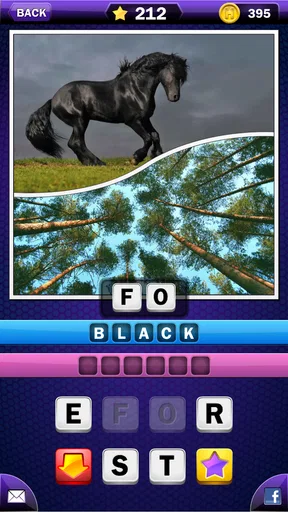
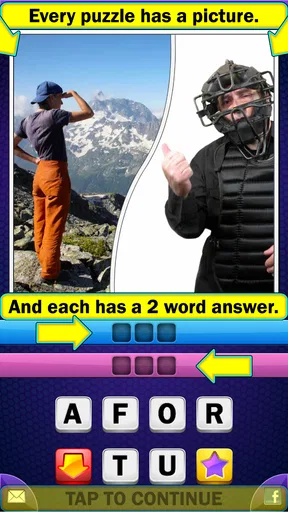
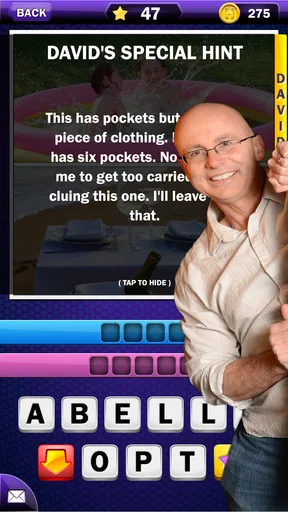
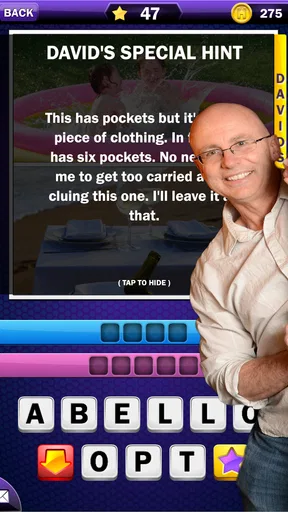
Our Review of Just 2 Words
 Analysis by Appyee
I expected Just 2 Words to be a quick word-game distraction, but its appeal is more specific than that. Created by Just 2 Fun and built around the work of puzzle creator David L. Hoyt, it offers a large supply of compact word challenges rather than a single campaign that I would finish and forget. The basic idea is easy to understand, which makes it comfortable to open during a short break, yet the clues can still demand a surprising amount of attention.
This is a free word game for Everyone, and the store listing describes it as containing over 2,500 puzzles. That combination gives it an immediately approachable feel: there is no intimidating rulebook, no complicated setup, and no need to reserve a long evening for a session. In my experience, the real question is not whether it is enjoyable for a few days. It is whether the puzzle format continues to feel fresh after the first burst of curiosity disappears.
Why the first week feels so inviting
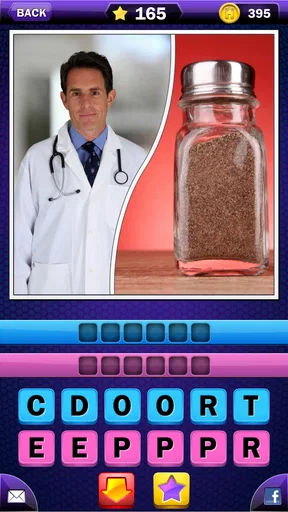
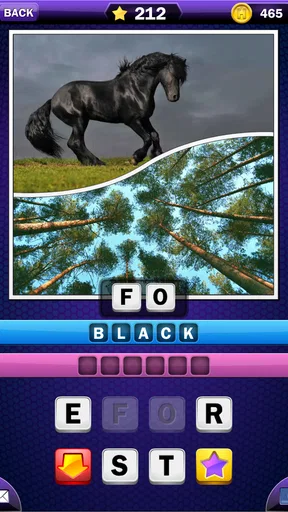
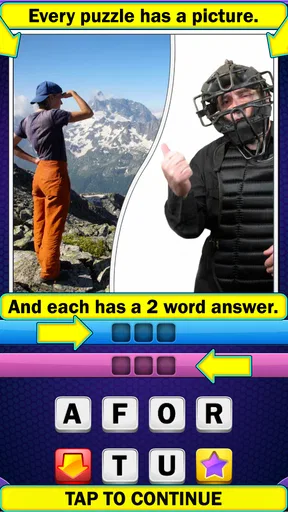
The strongest part of the early experience is how quickly I can begin solving. Just 2 Words keeps its central concept narrow, so I am not learning several modes before reaching the actual game. The title points toward the kind of answer I should be looking for, and that constraint gives each puzzle a clear target. I can play attentively when I want a mental workout or take one clue at a time when I only have a minute.
That short-session design suits ordinary routines particularly well. I found it easy to imagine using it while waiting for an appointment, during a quiet coffee break, or at the end of the day when a full game feels like too much effort. It does not ask me to remember a complicated story or maintain a large collection of resources between visits. I simply return to the next word challenge and start thinking.
The first-week appeal also comes from the balance between familiarity and resistance. The vocabulary is recognizable enough that I rarely feel shut out at the beginning, but the relationship between the clues and the answer can require lateral thinking. A puzzle may seem obvious until I test the most natural response and realize that the wording is nudging me toward a different interpretation. That small moment of correction is where much of the satisfaction comes from.
I recommend resisting the temptation to rush through the easiest clues. A useful way to play is to read the wording twice, form a couple of possible answers, and only then commit. This makes the game feel less like guessing and more like examining how two words can connect. It is also a good habit for players who usually become frustrated with word games after missing a few answers.
For families, the Everyone age rating makes the game broadly accessible, although the actual enjoyment will still depend on vocabulary and reading confidence. Younger players may need help with less familiar words, while adults can use the puzzles as a relaxed way to compare interpretations. I would not treat it as a formal learning tool, but it can encourage attention to meaning, phrasing, and word associations without making the activity feel like homework.
The public response suggests that the game has found a dependable audience. It holds a 4.6 average from around 5.1 thousand ratings, with roughly 1.8 thousand written reviews. Those figures do not guarantee that every puzzle will suit every player, but they fit my impression of a polished, accessible word title that many people can understand quickly.
Where it differs from ordinary word-game alternatives
Compared with a crossword, this is less about filling a connected grid and more about making a focused association. That means I spend less time managing crossing letters and more time interpreting the clue relationship. Compared with a daily word game, it is less dependent on a once-a-day ritual. I can keep playing when I am in the mood instead of waiting for a new puzzle the next morning.
It also feels different from an anagram game. Anagrams reward letter manipulation and speed, while Just 2 Words puts more weight on language sense. If you enjoy rearranging tiles or building long words from a letter rack, this may feel too restrained. If you prefer clues that make you pause and consider a phrase from another angle, the format is likely to be more comfortable.
That distinction matters when choosing where to spend time. Players who want competition, timers, leaderboards, or a strong social layer may find a conventional multiplayer word game more motivating. I would choose this one for quiet concentration rather than public performance. Its charm is in the individual act of solving, not in proving that I was faster than someone else.
What keeps it useful after the novelty fades
The large puzzle collection is the main reason the game can survive beyond its first week. Having over 2,500 challenges changes the way I think about it: this is not merely a tiny sample of the concept, but a title intended to remain available as a recurring source of short puzzles. The supply gives me room to play in bursts without immediately seeing the same material again.
Still, quantity alone does not create lasting value. The important question is whether I can fit the game into a repeatable habit. I found that it works best when attached to an existing pause in the day rather than treated as a major gaming commitment. A few puzzles with breakfast, one during a commute wait, or a small session before putting the phone away can make it a reliable mental reset.
One practical strength is that the game does not require me to prepare a special environment. I do not need a notebook, a large screen, or a long uninterrupted block of time. That low entry cost is easy to underestimate. Many puzzle games are enjoyable in theory but disappear from my routine because starting them feels like work. Here, the effort is concentrated in solving rather than in organizing the session.
I also like the way the format can serve different energy levels. When I am alert, I can examine the wording closely and look for a less obvious connection. When I am tired, I can stop after a single puzzle without feeling that I abandoned a larger objective. That flexibility is more valuable for long-term use than a dramatic progression system would be for me.
A useful personal rule is to stop before the puzzles turn into a chore. Because the game offers such a broad collection, I do not need to clear a fixed quota. If I miss several clues in a row, I take that as a signal to pause rather than forcing an answer through irritation. Returning later with a fresh mind protects the experience from becoming associated with frustration.
The game is also a reasonable choice for someone who wants a word activity without committing to a subscription-based routine. It is free to install, while in-app purchases range from $0.99 to $19.99 per item. I would approach those purchases as optional spending rather than part of the basic decision to try the game. The free entry point lets me judge the puzzle style first, which is exactly what I would want before paying for extras.
The maintenance burden is pleasantly small
By maintenance, I mean the effort required to keep a game enjoyable over time. Just 2 Words scores well here because the core activity is self-contained. I do not have to manage a roster, upgrade equipment, check timed events, or preserve a daily streak for the game to remain usable. That makes it a good fit for people who want a casual title that does not create another obligation.
The current version is 6.2, and the minimum operating system is Android 6.0. For someone using an older compatible Android device, that broad system requirement can make the game easier to consider than newer titles that expect recent hardware or software. I would still check how comfortably it runs on a particular phone, but the stated requirement does not make it feel aimed only at current flagship devices.
There is also little strategic maintenance in the usual sense. I do not need to preserve a particular build or learn a changing meta. My only ongoing task is deciding when to play and how much attention to give each clue. That simplicity is a benefit for casual users, although players who enjoy long-term planning may find it lacking.
The trade-off is that the game’s longevity depends on my own motivation. Without competitive rankings, a narrative arc, or a collection system driving me forward, I have to supply the reason to return. For me, that is acceptable because I want a calm word puzzle. Someone who needs external goals may open it repeatedly during the first week and then move on once the initial challenge has been sampled.
What can cause fatigue over repeated sessions
The same focused format that makes the game approachable can eventually become its main limitation. Every puzzle asks me to engage with a compact word relationship, so the experience does not transform dramatically from one session to the next. If I play too many in a single sitting, the clues can begin to blur together, and the satisfying pause before an answer turns into a routine scan.
Vocabulary is another natural dividing line. A player with a broad word background may move quickly through some puzzles, while another player may encounter unfamiliar terms that feel like obstacles rather than clever challenges. That is not necessarily a flaw in the game, but it affects whether the difficulty feels fair. I prefer using a missed clue as a prompt to reconsider the wording instead of assuming that the first answer that comes to mind must be correct.
There is also a difference between productive difficulty and vague difficulty. When I can identify why my answer failed, I feel invited to try again. When the intended connection feels too dependent on a narrow interpretation, the puzzle loses some of its elegance. A large catalog will naturally contain both kinds of moments, so I judge the game by the overall rhythm rather than expecting every clue to land perfectly.
Another possible source of fatigue is the absence of a strong social reason to return. Traditional alternatives may offer head-to-head matches, shared challenges, or a daily result that gives players something to discuss. Just 2 Words is more private. That is ideal if I want to avoid notifications and pressure, but it is a weakness if my enjoyment comes from comparison or community.
I would also skip it if my preferred word games are primarily about speed. The value here comes from considering meaning, not from tapping rapidly or building a high score under a countdown. Likewise, players looking for an adventure, a story campaign, or a visually elaborate puzzle world should choose another category. This is a deliberately modest game, and its restraint will feel either refreshing or bare depending on what I expect from mobile entertainment.
How I would build a lasting playing habit
My best approach is to treat the game as a small thinking exercise rather than an endless feed. I choose a natural stopping point, keep a difficult clue in mind for later, and return when I am not already mentally overloaded. That creates a healthier rhythm than trying to consume the entire collection as quickly as possible.
For a shared household, I would use it as a conversation starter. Two people can consider the same clue separately and explain why they read the wording differently. That adds a social layer without requiring a built-in multiplayer mode. It is especially useful when one person sees a connection immediately and the other notices a nuance that was easy to miss.
For language practice, I would be more cautious. The game can expose a player to words and associations, but I would not rely on it as a structured course because puzzle solving and vocabulary instruction are different goals. It is better suited to reinforcing curiosity: after a difficult answer, I might look up its meaning or notice how it is used elsewhere.
For travel or intermittent connectivity, I would check the exact behavior on the device before depending on it. I would not make assumptions about offline access simply because the puzzles are compact. The safer conclusion is that its short-session format makes it convenient to carry, while the practical connection requirements should be tested personally before a trip.
Privacy-conscious users may also appreciate the uncomplicated nature of the activity, but I would still review the permissions and purchase prompts shown on the device before settling into regular use. The important point is that the game itself does not require me to create a public identity or maintain a competitive profile to enjoy the puzzles. That keeps the experience focused and low pressure.
My long-term verdict
Just 2 Words earns lasting space on my phone when I want a compact, thoughtful word game rather than a feature-heavy mobile hobby. Its first-week appeal comes from immediate playability and clues that can be simple to enter but rewarding to unpack. Its month-to-month value comes from the extensive puzzle supply and the freedom to play in small, irregular sessions.
The game is not maintenance-heavy, which is one of its strongest qualities. I can leave it alone for a while and return without relearning systems or repairing a broken streak. That makes it more durable for ordinary life than games that demand daily attention. At the same time, the lack of progression, competition, and dramatic variety means that its long-term pull depends on whether I genuinely enjoy the central word-solving loop.
My honest recommendation is aimed at readers who like quiet puzzles, word associations, and flexible play. I would suggest trying the free version before considering any in-app purchase, then judging whether the clues still feel satisfying after the initial novelty has passed. If you want a calm activity for spare moments, it has a credible chance of becoming a regular companion.
I would point a friend toward a crossword app for grid-based deduction, an anagram game for letter manipulation, or a competitive word title for social pressure and speed. But when the goal is simply to pause, read carefully, and find the connection between two words, this game has a clear identity. Its lasting value comes from being easy to return to without becoming another obligation.
That is why I see it as more than a disposable time-filler, while still keeping expectations realistic. It will not satisfy every kind of word-game player, and repeated marathon sessions may expose its narrow format. Used in the way it suits best—short, thoughtful visits spread across the month—it remains a free and approachable puzzle game that I would be comfortable recommending to a friend.
Verdict
Strengths of Just 2 Words
- Simple rules make it easy to start playing immediately.
- Short rounds are ideal for quick breaks or casual sessions.
- Word challenges help exercise vocabulary and creative thinking.
- Clean interface keeps the focus on solving each puzzle.
- Suitable for playing alone without requiring an internet connection.
Limitations of Just 2 Words
- Some clues may feel vague and have multiple possible answers.
- Difficulty can vary noticeably between consecutive puzzles.
- Limited gameplay variety may reduce long-term appeal.
- Ads can interrupt the experience, especially between rounds.
- Players wanting competitive multiplayer features may find it lacking.
Other Releases by Just 2 Fun
View All
Giant Jumble Crosswords
Word4.8

Just 2 Words Plus
Word4.6
Similar Picks in This Category
View All
Word Search - Word Puzzle Game
Bluetile4.8

Word Search Quest - Puzzles
Blackout Lab4.8

CodyCross: Crossword Puzzles
Fanatee, Inc.4.7

Words of Wonders: Crossword
Fugo Games4.9

Wordscapes: Word puzzle game
PeopleFun4.7

Word Search Explorer
PlaySimple Games4.9
Frequently Asked Questions
What is Just 2 Words and how does the game work?
Just 2 Words is a word puzzle game built around solving clues with a two-word answer. Each puzzle gives you a short hint, and you must think of the phrase or word combination that best matches it. The concept is easy to understand, but later puzzles can become surprisingly challenging, especially when several answers seem possible. It is a good choice for players who enjoy vocabulary, trivia, and relaxed brain-training games.
Is Just 2 Words free to download and play?
Just 2 Words can generally be downloaded for free, allowing players to begin solving puzzles without paying upfront. However, the game may include advertising, optional purchases, or other in-app features depending on the version and platform. Before downloading, it is worth checking the current store listing for pricing details, available subscriptions, and whether certain hints, puzzle packs, or ad-removal options require payment.
Does Just 2 Words work offline?
Many of the available puzzles in Just 2 Words may be playable without a constant internet connection once the necessary game content has loaded. Offline access can be useful when traveling or when mobile data is limited. Nevertheless, an internet connection may still be required for advertisements, updates, cloud synchronization, leaderboards, or in-app purchases, so offline functionality can vary between devices and app versions.
Is Just 2 Words suitable for beginners and younger players?
The basic gameplay is accessible for beginners because each round uses a simple clue-and-answer format rather than complicated controls. Even so, the difficulty depends on vocabulary, general knowledge, and the wording of each clue. Younger players can enjoy it as a language exercise, but parents should review the store rating and privacy information because puzzle content, advertisements, and data practices may differ by age setting and platform.
What should I do if I cannot solve a puzzle in Just 2 Words?
If a clue is difficult, take a moment to identify the topic, possible synonyms, and common two-word expressions connected with it. Depending on the version, the game may provide hints or other assistance, sometimes in exchange for earned points, watching an advertisement, or making an optional purchase. Avoid using help too quickly, since reconsidering the clue often reveals the intended answer and makes the eventual solution more satisfying.
Play our best games!


